The Baby's Room in Winter: The Small Details That Affect Comfort and Calm
How to prepare a baby's room for winter: steady temperature‚ a safe crib‚ a soft night light‚ a ready changing station‚ laundry and a simple routine.
When looking for a winter blanket for a baby made of pleasant materials‚ it is important to check the age it is meant for‚ the manufacturer's instructions and the current safe sleep guidelines‚ rather than relying only on thickness or softness. Make sure the baby's face and head stay uncovered‚ that the crib does not fill up with soft objects and that every product suits the baby's stage of development. If you are unsure about clothing or covering during sleep‚ it is best to consult a well-baby clinic nurse or a medical professional who knows the baby. Instead of trying to decide in advance what will feel comfortable to the baby every night‚ it is better to build a stable environment and gather clues from the daily routine. Room temperature‚ the condition of the skin‚ the quality of sleep and how clothing or textiles hold up after washing provide more useful information than a passing feeling of an adult. From there you can make small changes‚ one at a time‚ and see whether they really improve the night.
A Steady Temperature Without Overheating
A very warm room is not necessarily more comfortable. Strong heating dries the air and can lead parents to pay less attention to the clothing itself. It is better to keep a steady temperature in line with professional guidelines‚ keep the crib away from a direct heat source and check there is no cold draft from the window or the door. A baby's hands and feet may feel cool even when the body is comfortable. Gently checking the back of the neck or the back gives a better picture. Damp‚ very warm skin can indicate too many layers. Adjustments should be made according to the baby and the room‚ not according to a fixed number that suits every home. Care is part of the choice too. Clear washing instructions‚ a reasonable drying time and an accessible storage spot decide whether an item goes back into use or stays aside after the first time it needed attention.
A Simple Crib as the Basis for Calm
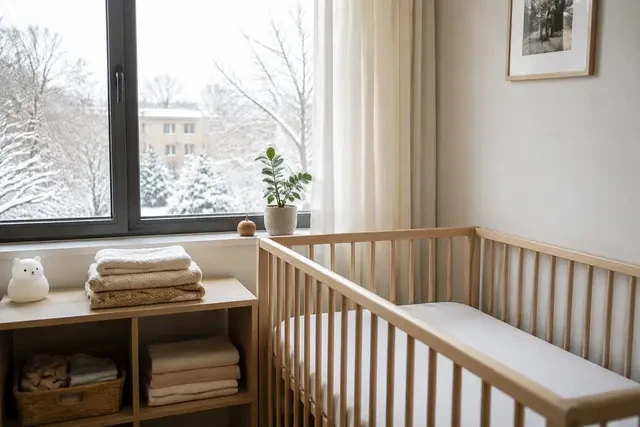
Nursery design offers pillows‚ stuffed toys‚ bumpers and folded blankets‚ but during sleep you should follow the safety rules and keep the space clear of items not meant for it. A sheet should be pulled tight over a suitable mattress‚ and access to the crib should stay open. Simplicity also makes a quick check at night easier. Keep decorative items separate from the sleeping area itself. A basket‚ a picture or decorative textiles can go in another part of the room‚ so the crib stays clear and functional. The eye still sees a warm‚ personal room‚ without unnecessary items going into the crib.
A Night Light That Serves the Parent
Bright light in the middle of the night wakes both the baby and the parent. A dim lamp in a warm tone‚ placed so it does not shine directly in the face‚ allows feeding‚ changing and checking without turning night into day. It is important that the switch is within reach and that cables do not run near the crib or anywhere the baby might be able to reach later. In the morning‚ open the shutters and let in natural light. The difference between day and night supports the routine and also allows the room to be aired. There is no need to keep the room dark for every nap; that depends on the baby‚ but a clear rhythm of light and dark helps the whole household get organized.
A Changing Station Ready for Cold Nights
When every item has a fixed place‚ changing is shorter and calmer. Diapers‚ a change of clothes‚ a clean surface and a laundry basket should be within the adult's reach but out of the baby's reach. In winter‚ prepare a complete spare outfit in advance so you are not hunting for a sock or a layer while the baby waits. Safety comes before convenience: one hand stays on the baby while they are on a raised surface. If you need to step away‚ take the baby with you. Good organization reduces the number of times you are tempted to turn to the closet "just for a second".
Washing‚ Drying and Real Softness
Baby textiles are washed often‚ so check the washing instructions before buying. A pleasant item that cannot be dried in a reasonable time may stay damp or leave you dependent on a single piece. Two simple sets that are easy to wash are sometimes better than a large collection of delicate items that need special care. A strong smell is not a sign of cleanliness. Choose detergents according to the guidelines and the baby's sensitivity‚ make sure items dry completely and air out the closet. If skin irritation appears‚ seek appropriate advice rather than switching products again and again without understanding the cause.
A Routine That Reduces Decisions
Tired parents need a simple system. A room thermometer in a fixed spot‚ a ready set of clothes‚ an accessible night light and a clear order around the crib reduce checking and searching. You can prepare a short list for your partner‚ the grandparents or anyone else who looks after the baby‚ so everyone follows the same rules. There is no need to control every night. Babies change‚ the weather changes and the routine develops too. The goal is to create a safe‚ flexible basis and make small adjustments as needed‚ without turning every change in temperature into a major operation.
Tracking Signs Instead of Guessing
A short log over a few nights can help you tell a one-off event from a pattern. There is no need to record every movement; it is enough to note the room temperature‚ the clothing layer‚ unusual waking and signs such as sweating or cold skin. When you change several things at once it is hard to know what made the difference‚ so it is better to change one variable and wait. In case of a safety doubt or a medical concern‚ turn to a professional and do not rely on a home experiment. Tracking is not meant to create total control‚ but to reduce guesswork and let parents respond in a calmer‚ more consistent way.
In Summary
Comfort in the baby's room in winter rests on balance: moderate heating‚ suitable clothing‚ a clear sleeping area‚ gentle lighting and accessible equipment. Textiles are chosen according to age‚ instructions for use and safety guidelines‚ not only by looks and softness. When the room is simple to run‚ parents have more room to listen to the baby and fewer reasons to act out of stress in the middle of the night. When every item is tested by touch‚ in care and in the routine‚ the room stays pleasant without piling on layers and decisions. Gradual adjustment makes it possible to respond to the season and the stage of life in real time.