New AC‚ Flue or Pipes: What Should You Check Before Drilling a Hole in the Wall?
Before drilling a wall for an AC unit or hood‚ check the wiring‚ the structural elements‚ the diameter and angle‚ the sealing and your neighbors.
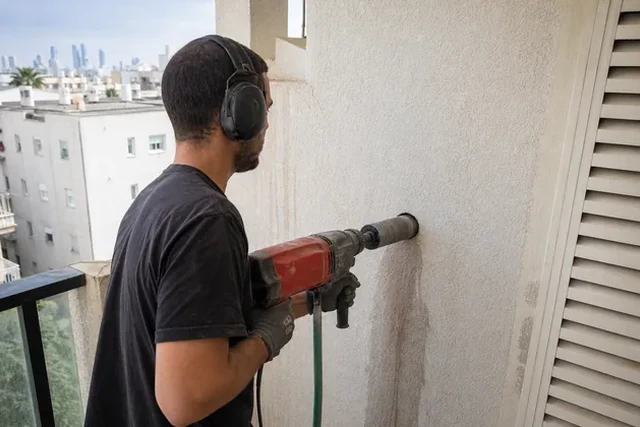
So before you open a hole in the wall‚ it pays to stop and check a few things. The standard method today for round‚ precise openings in concrete is professional diamond core drilling‚ which makes a clean hole of the exact diameter without shattering the wall around it. But even the best method depends on the planning that comes before it. Here is what to check before the professional arrives‚ so the job is quick‚ clean and safe.
What Runs Inside the Wall?
The first check is what lies inside the wall at the spot where you want the opening. In older buildings electrical conduits and water pipes sometimes run in unexpected places‚ and up-to-date plans are not always available. An experienced professional will use a pipe and rebar detector before drilling and mark the safe spot. It is also worth checking what is on the other side of the wall‚ such as a neighbor's window‚ an outside pipe or a stairwell wall‚ so the hole does not come out in a problematic place.
Beams‚ Columns and Rebar
Drilling through a structural beam or column can weaken the building‚ even if the opening is small. If the planned spot is close to a beam or a column‚ it is better to move it‚ and when in doubt‚ consult an engineer. Even an ordinary wall contains reinforcing steel‚ and while diamond drilling cuts it cleanly‚ it is better not to cut more than necessary. A responsible professional will stop and ask when they hit especially thick rebar.
The Right Diameter and Angle
Every installation has its own requirements. An AC line needs an opening of a specific diameter with a slight outward slope‚ so the condensate does not run back into the wall. An opening for a range hood has to match the diameter of the duct. Get the exact dimensions and the required angle from the AC or hood installer and pass them on to the person doing the drilling. An opening that is too big needs filling and sealing‚ and one that is too small means drilling again.
Sealing and Weather
Every opening in an exterior wall is a point where water can get in. After the installation‚ it is important to seal the opening outside and inside with a suitable material and make sure the slope is right. Plan the work for a dry season‚ and in any case ask the professional to close the opening temporarily if the installation is not done the same day. In older buildings it is also worth checking the plaster and paint around the opening‚ because drilling near a cracked area can widen the crack and open another path for damp. Good sealing at the installation stage costs far less than fixing a damp wall after one winter.
Permits and Neighbors
An opening in the exterior wall of a shared building may require the consent of the house committee‚ especially if it changes the facade or involves a protruding outdoor unit. Check the building bylaws and let the neighbors know before the work‚ because drilling concrete is noisy and is felt in the adjacent apartments. The position of the AC outdoor unit also affects the neighbors: noise and hot air aimed at their window are a constant source of complaints. When you coordinate in advance and choose a spot that takes everyone into account‚ the installation goes smoothly and relations in the building stay good.
Summary and Recommendations
Opening a hole in a wall is a small job that needs big planning. Check what runs inside the wall‚ keep away from beams and columns‚ get the diameter and angle from the installer‚ take care of the sealing and coordinate with the building. When all of that is ready‚ the drilling itself takes minutes‚ and the AC unit or the new pipes go in without surprises and without needless cracks. It is also worth keeping a photo of the exact position of the opening and of what runs next to it‚ in case you need to open the wall in the same area again in the future.